


Ecumenical Solidarity Visit “Living Letters” to the Democratic Republic of Congo
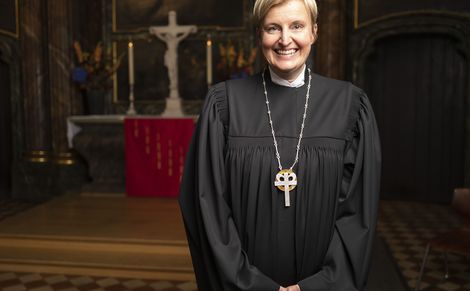
(Bonn, 26.07.2009) Karin Döhne, head of EED department Africa 1 was part of the delegation from the World Council of Churches visiting the Democratic Republic of Congo in July 2009. She summarizes what the group learned on their visit to the provinces of Bas Congo and Kasai Oriental.
War, Crisis, Violence
The effects of war and crisis are not only experienced in the eastern part of the Democratic Republic of Congo. By visiting the two provinces of Bas Congo and Kasai Oriental we learnt how other areas have become affected too.
In the Bas Congo province things have changed dramatically since the first war broke out. Even before, there had been refugees as well as fighters coming across the border from Angola. Today, there are a number of refugees who have come from the eastern part of the DRC and have settled in the area of Bas Congo. Weak economic conditions and high levels of unemployment lead to frustration among the residents of the province in general and the youth in particular. There is consensus among all people we spoke to, that this is the root cause of the increasing level of tension in the province. Violence becomes more and more a feature of everyday life. This includes violence within the family and on the streets, but also as a means to push a political agenda, specifically by the local movement of "Bundu di'a Congo". This movement initially was a cultural and spiritual one, reviving traditional elements of the culture of the "Congo" area. Today the movement pursues a politicised agenda.
As a consequence of augmenting population numbers and shrinking income opportunities, a new attitude develops among the population. Different to the traditional culture of welcoming guests and strangers, there are now feelings of distrust and hatred towards outsiders springing up even if they are of the same nationality. There is also uncertainty of land titles and rights. Both factors contribute to feelings of uneasiness, tension and insecurity in the region. Economic activities, in particular those of women, are hampered under the threat of violence and crime. No longer can they move freely as before and go by themselves to far away fields and places.
The effects of war and crisis are different in the province of Kasai Oriental, which belongs to the diamond mining areas of the DRC. The dominating company "MIBA", which is owned by the Congolese government and a Belgian investment company, has closed down its production site in Mbuji Mayi, the provincial capital. During the second war not only the money which was generated from the mining went into the government's purchase of weapons. Equipment, vehicles and planes of the company were used for military purposes. Eventually the company's capital and infrastructure were depleted and production broke down. With this, the major source of income for the people of the city of Mbuji Mayi which has about 3.5 Million inhabitants dried up. After years of urban growth, the city which was only established after independence, now experiences the hardships of poverty. Health posts close, because people can no longer pay for medicines. School buildings break down, because there is no money to repair. People have difficulty to gain their daily food.
However, in the streets of the city we observed diamond traders along the road. The one we talked to had diamonds worth 25.000US Dollar put on the table in front of him. The system works informally and has a strict regime, organising the miners, traders and exporters. In the town of Mbuji Mayi the local business community organises its own security. Even though activities are taking place at day light in the streets, there is no transparency, no public income revenue. Hence the soil of the province produces fortunes, but for the ordinary people not much is left.
Antipersonnel mines in two of the three districts of the province are a severe threat and hamper agriculture and forest management until today. With the help of an organisation called "Mines Advisory Group" (MAG) the Eglise du Christ au Congo has launched a mine awareness programme.
Conclusion: Economic hardships and lacking perspectives, in particular for the youth, result in frustration - a fertile ground for political movements such as Bundu di'a Congo which become increasingly radical and thus polarise the population. Violence, war and crisis change the culture, the values and the way people live together. People tend to move away from remote places looking for opportunities and protection in the towns, hence urbanisation is speeding up. With a growing population, there is a shortage of paid jobs and of other resources, including land. Whereas the more prosperous province Bas Congo experiences in-migration, the Kasai is deserted by who ever can afford leaving, e.g. the better off and well educated.
Women in a changing environment
In both provinces we were informed that sexual violence against women increases, in particular amongst young people. HIV infections follow suit. In the mining areas very young girls offer their body against money and favours. Women and children find themselves at the end of the chain of repression. For example, aggression and violence have been so far no significant features of the Bas Congo culture. Yet, values are changing under the impression of war. Also the patterns of family and the relationship between men and women change. It is no exception that men who work as police, military or public servants have several relationships and families. The women in this kind of settings have no economic or juridical security. What responsible marital relations and parenthood do mean under current conditions has become a central issue for all churches. The common perception is that males fight and women suffer, children become victims too.
However, women are contributing to solutions out of the crisis: They are the back bone of economic productivity in agriculture and small business. They maintain the families, care for the young and the old. In the churches it is them who are the majority and uphold the communities. They deserve respect and support. Though there are few women in church leadership positions, they want to make their voices heard.
Youth, the future of the nation!?
Young people are easily tempted. They like to experiment and try new things, including the use of drugs. Cannabis for example is grown and consumed nowadays in many places.
Schools are the place of educating young people. Yet, they face severe problems such as corruption (bribes to be paid in cash or sexual favours), which undermines the moral education and value system of the up coming generation. One has to examine whether Church schools are free of this kind of abuses.
What is the implicit message to the youth of preachers and evangelists who turn into leaders of rebels? What do these people make out of the scriptures?
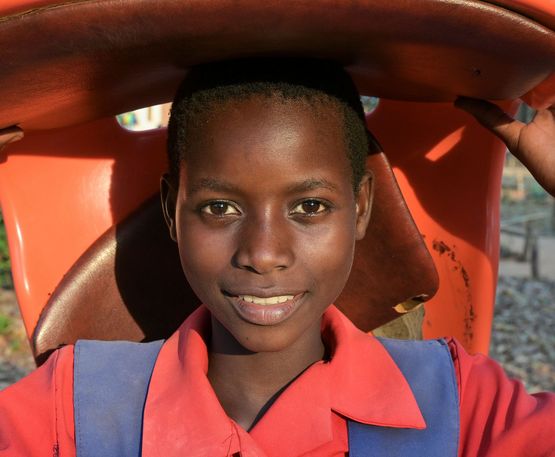
Basically the military trade is carried out by mostly young men, be it on the rebel side or on the army side. This causes distrust against male youth in the society. They are seen as aggressive, useless bunglers. Instead, they would need guidance, constructive role models and economic perspectives. One church leader stated if the churches can no longer speak to and with the young, a social and cultural catastrophe will follow.
Being the Church of one nation
The continuous war in the eastern part of the country, which comes to a short stand still to erupt again ("cycle infernal") undermines the trust in peace negotiations and peaceful means of exercising political power - also in Bas Congo and Kasai! The notion of peace looses its value. Outbreaks of violence, including violence against women and children, show the decline of culture and social cohesion.
What happens around Goma and Bukavu are no far away events for the people in Matadi, Kimpese and Mbuji Mayi. The effects of the wars come like waves and impact their lives too. Hence, any solution to this devastating crisis must be sought for not just in the east, but must engage the whole nation. The church leaders of Bas Congo in particular expressed this point strongly. They feel left out. In Kasei, too, this perception of desolation and being abandoned is further enhanced by the remoteness of the area.
The churches are strong forces in both of the visited provinces. Under the umbrella of the ECC the different "communautés", i.e. member churches keep their own identity. For social services and projects they pool their resources and energies together. In my view, this shows that maintaining an identity does not exclude cooperation and respect of each other.
What is the response of churches in times of crisis?
1) Firstly, they continue the pastoral work of congregations. This may sound like nothing special. Yet, it is of utmost importance to give people hold, hope, encouragement, feeling at home. For example, in spite of being impoverished, people in Mbuji May still invest in new church buildings. Whereas in the past the mining society was providing, it is now the people themselves who are constructing with their own means, even when progress is slow.
2) Supported by the respective departments and programmes, congregations work on issues of how to live in peace with each other, how to accept foreigners and welcome them as members. In Matadi for example we witnessed an example of the successful integration of a refugee family into a local congregation.
3) Ecumenism practised by the ECC, but also by other churches through membership in local coordinating committees for various purposes, is a strong signal that cooperation, trust and respect are possible in spite of differences.
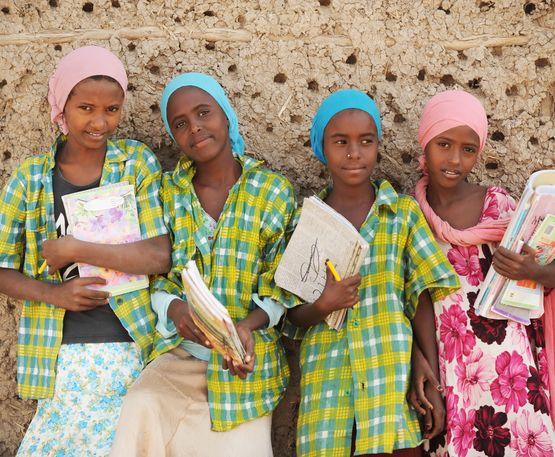
4) The churches are the biggest service providers in terms of health and education (more than 150.000 students studying in church institutions in Bas Congo, 1400 schools in Kasai) in the country. Examples we visited are the Institute Medicale Evangelique, which runs a 400 beds hospital and trains doctors and nurses, and the Centre Evangelique pour la Cooperation in Kimpese, which is in charge of hundreds of schools and a university. In Mbuji Mayi we saw church run schools and were informed on the health work. Schools are seen as an important field where children can learn and practice peaceful co-existence and counter balance the voices (and actions) of those who spread conflict and tension. The medical services not only offer physical care, but also psychosocial and spiritual care for those who suffer from trauma.
5) Churches deal with social problems. In Kasai this is the department "urgances" which cares for street children and looks into issues such as prostitution and demining. In Bas Congo the Centre Régional d'Appui et de Formation pour le Développement mobilises rural villages for community development and tackles the problems of deforestation and ecological damage. It supports local farmers to market their products.
6) Churches give a voice to the population and express their concern regarding important socio-political issues such as:
- -Who are the promoters of war, who supplies them with weapons? In Matadi it was stated that there are outside forces at work too. Outside nations such as the USA, France, Belgium, the EU are part of the game, fuelling the conflicts by pursuing their economic and political agendas which have nothing to do with the interests of the people of Bas Congo.
- Regarding the planning of major projects such as the INGA barrage No III, a deep water port in Matadi, oil exploitation in the Bas Congo region, the church is demanding proper participation of the representatives of the population. Such projects must benefit the local people too.
- The situation of immigrants and refugees needs to be reflected more systematically. Ethnic belonging though a constituting part of identity should not determine who belongs to communities and who remains an outsider, foreigner. This applies to the society as a whole, but also to the churches congregations.
- The guiding principle for the exploitation of natural resources of a nation must be the benefit and well being of the population, local and national. The churches do not keep quiet in the face of the scandal of resource exploitation for financing death and greed.
- Together with the ecumenical family worldwide crimes and wrong doings of private companies and the political involvement of other nations need to be exposed.
We observed that the churches want to continue to use their different avenues of influence in the country. In doing so they shall be encouraged and supported by the worldwide ecumenical family.
Bonn, July 26, 2009
Karin Doehne


